

An investing lesson is more useful when it has a name attached to it.
Not a generic warning about dilution. A company that diluted shareholders. Not a vague statement about patience. A stock where patience was rewarded. Not a textbook discussion about execution. A management team that either delivered or failed to deliver.
We reviewed the Stock Avengers archive from April 2021 through August 2026—290,217 public messages across 49 channels and selected ten stocks that produced ten distinct outcomes. We then checked the company names, tickers, transactions, and operating claims against company issued releases and filings. Prices and member outcomes are identified as observations from the Discord archive; company results are linked to the corresponding corporate disclosure.
1. Happy Belly Food Group (CSE: HBFG; OTCQB: HBFGF): Patience works when execution keeps validating it
The outcome
The Discord archive records TSA finding Happy Belly Food Group at approximately $0.10. It went on to become one of the community’s clearest long term successes.
This was not a four day spike or promotional trade. TSA watched management acquire and build brands, add locations, sign area development agreements, attract experienced multi-unit and multi franchise operators, improve system sales, and strengthen the balance sheet.
The company also endured a deeply painful period after Gary’s passing. The team had to grieve, retool, and carry on. It did. Sean and the broader team continued building focused on the legacy of Gary and the long term plan.
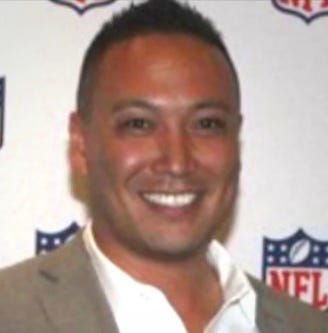
Rest in Peace, Gary Fung
Gone but never forgotten.
Your impact lives on.
By Q2 2026, HBFG reported $8.5 million in quarterly revenue, up approximately 57% year over year; $28.4 million in QSR system sales, up 75%; and 95 operating restaurants compared with 62 a year earlier. The company also reported approximately $12 million in cash. Figures and the exchange tickers are confirmed by HBFG’s Q2 2026 release
The lesson
Patience is not blind when the company keeps adding evidence.
HBFG taught us that a great long term investment does not need one spectacular catalyst. It can compound through acquisitions, openings, signings, financing decisions, and quarterly improvements. The reason to continue holding was not loyalty to the original call. It was that the operating story kept becoming more valuable.
2. KITS Eyecare (TSX: KITS): A strong business can outperform without a promotional story
The outcome
KITS Eyecare became a profitable pick for members who recognized the quality of the underlying business. The archive later included a direct acknowledgment that the idea had helped many people make money.
One revealing moment came during a secondary offering. Some investors saw the word “offering” and assumed dilution. The discussion correctly distinguished a secondary sale existing holders selling shares from a treasury financing in which the company issues new stock. KITS confirmed that it received no proceeds from the sale. The structure and ticker are verified in the company’s secondary-offering release.
KITS did not require a complicated turnaround narrative or binary regulatory outcome. It offered a growing operating company, an understandable consumer product, and numbers the market could evaluate.
The lesson
The simplest businesses can produce some of the cleanest wins.
KITS showed the value of understanding what a transaction actually is before reacting to its headline. It also reminded us that an investment does not need to be obscure or dramatic to work. Sometimes growth, execution, and a comprehensible business model are enough.
3. NorthStar Gaming Holdings (TSXV: BET; OTCQB: NSBBF): A successful trade is not automatically a successful investment
The outcome
The Discord archive records TSA becoming interested around $0.04 to $0.045 as the company discussed Canadian expansion and its BettorView relationship. The archive subsequently records a peak near $0.18 within four trading sessions a maximum move of roughly 350% from $0.04.
It later returned toward its original range and shortly after fell to shit.
Early traders who sold into strength had an exceptional opportunity. Investors who chased the move or treated the temporary price as permanent value experienced something entirely different. NorthStar’s ticker and the substance of the partnership are confirmed in its BettorView announcement.
The lesson
A spectacular price move and a durable investment are two different achievements.
BET taught us not to use a chart’s highest print as the return “the group made.” Entry, liquidity, position size, and exit determine the actual result. The trade worked brilliantly for some. The round trip showed why that fact alone did not make it a long term compounder.
4. Tetra Bio-Pharma (formerly TSX: TBP; OTCQB: TBPMF): Valuable science cannot save common equity from a broken balance sheet
The outcome
The original Tetra Bio-Pharma (TBP) excitement centred on regulatory submissions, clinical potential, intellectual property, and the value approvals might unlock. Early discussion also contained heavy momentum and promotional language.
Over time, financing became the dominant reality. On August 1, 2023, the company announced a voluntary assignment into bankruptcy under Canada’s Bankruptcy and Insolvency Act, and it was subsequently delisted from the TSX. The former tickers and bankruptcy are confirmed in the company’s bankruptcy announcement.
TBP has been gone for years and should not define modern TSA. Its relevance is one precise lesson not nostalgia and not an attempt to place today’s community under the weight of an historical painful lesson.
The lesson
The value of an asset and the value of the common shares are not the same thing.
Good science, patents, regulatory progress, and takeover possibilities mean little to shareholders if creditors and new capital stand ahead of them. The catalyst was never separate from the financing risk. Financing determined who would still own the catalyst if it arrived.
5. Simply Solventless Concentrates (TSXV: HASH): Revenue growth cannot compensate for weak integration and disappearing margins
The outcome
The initial Simply Solventless (HASH) thesis emphasized rapid growth, acquisitions, new brands, geographic expansion, and apparently inexpensive forward valuation. Then the structure began to fail.
An audit-driven revenue-recognition change removed approximately $4.3 million from reported 2024 revenue. Reported gross margin fell to roughly 13%, inventory became bloated, cash burn remained uncomfortable, and investors struggled to evaluate the acquired businesses clearly. The company had also added approximately 60 million shares during 2024.
Trust deteriorated alongside the financials. What initially looked like aggressive consolidation increasingly looked like businesses assembled faster than they could be integrated. In February 2026, three subsidiaries entered CCAA creditor protection and the stay was extended to a fourth subsidiary. That narrower wording matters: the proceedings involved the operating subsidiaries within a restructuring initiated by the public parent. The structure and ticker are confirmed in the company’s restructuring announcement.
The lesson
Acquiring revenue is not the same as building a business.
HASH taught us that reported growth can hide poor cash conversion, weak integration, margin deterioration, and balance sheet stress. Size did not protect shareholders when the economics underneath it were unstable.
6. Zoomd Technologies (TSXV: ZOMD; OTC: ZMDTF): Customer concentration can turn a record year into a credibility crisis
The outcome
Zoomd Technologies (ZOMD) initially looked exceptional: strong revenue growth, expanding margins, substantial operating cash flow, significant cash, and no major long-term debt. At one point, the archive described net income growth of roughly 150% and operating margins above 20%.
Then operating-model changes at two major customers changed the picture. Q4 2025 revenue fell 50% year over year, from $15.1 million to $7.5 million. Zoomd still reported $0.2 million in quarterly net income and ended 2025 with $22 million in cash and no long-term debt. Those figures, stated in U.S. dollars, are confirmed in Zoomd’s full-year 2025 release.
The setback did not make Zoomd worthless. Cash and a debt-free balance sheet provided resilience, while new clients created a possible recovery path. But the sudden change exposed a risk that the headline growth numbers had not made visible enough.
The lesson
The quality of revenue matters as much as its growth rate.
Customer concentration is not a footnote. When a small number of clients drive a large share of profit, one delayed budget or platform transition can transform the earnings profile. A strong balance sheet can buy time, but it cannot make concentrated revenue recurring.
7. EMERGE Commerce (TSXV: ECOM): A damaged company can become investable after the balance sheet changes
The outcome
EMERGE Commerce (ECOM) was once a larger but structurally weaker company carrying expensive debt and the scars of earlier expansion. The later thesis was not that the old model would suddenly return. It was that management had been humbled, sold non-core assets, reduced debt, preserved the business, accumulated cash, and refocused on profitable operations.
The archive followed a company with approximately $4 million in cash, a refinancing opportunity, and profitable assets. It also highlighted creative capital allocation: EMERGE sold the dormant SHOP.ca and SHOP.us domains to Shopify for approximately US$380,000, or C$540,000, and used those proceeds along with proceeds from another asset sale toward the Tee 2 Green acquisition. The exact transaction structure is confirmed by EMERGE’s acquisition release.
The turnaround was not complete, and a later equity financed acquisition reopened legitimate questions about dilution. But the business had become materially different from the one associated with its old share price and old mistakes.
The lesson
A thesis can improve because the balance sheet improves, even before rapid growth returns.
ECOM taught us to distinguish a broken stock from a permanently broken company. Selling assets, reducing debt, lowering interest expense, and improving cash generation can create value quietly. Turnarounds begin with survival and simplification, not exciting revenue forecasts.
8. Glow Lifetech (CSE: GLOW; OTCID: GLWLF): A healthier company does not always produce an immediate stock-market reward
The outcome
Glow Lifetech (GLOW) was added around $0.05, reached approximately $0.065, and later returned to roughly $0.045. Members who bought near $0.04 to $0.045 and sold into the return to $0.055 captured useful gains, while the longer price history remained largely sideways.
Underneath that price action, the company changed. Q2 2026 revenue increased 20% year over year, the company reported positive quarterly operating cash flow, and its remaining 8.9 million warrants expired unexercised, eliminating the warrant overhang. These claims and tickers are confirmed in Glow’s Q2 2026 release.
But Q2 2026 also showed the unfinished part: sequential revenue declined, EBITDA weakened, inventory increased, and first half operating cash flow remained negative. The better balance sheet removed an existential problem. It had not yet proven a self funding growth engine. However we expect Q3 to improve as we recently discovered Seasonality.
The lesson
Removing a major risk is not the same as creating a catalyst.
GLOW taught us that balance sheet repair can make an investment safer without making the stock move immediately. The company improved structurally, but the market still wanted sustainable revenue, EBITDA, and operating cash flow.
9. PharmAla Biotech Holdings (CSE: MDMA; OTC: MDXXF): A sector-wide regulatory event can overwhelm an individual thesis
The outcome
The PharmAla Biotech (MDMA) channel began as a temporary research and social channel rather than an official TSA pick. Some members traded the opportunity successfully, and the discussion explicitly encouraged people to take profits along the way.
The sector later confronted the FDA’s rejection of Lykos Therapeutics’ application for MDMA-assisted therapy for PTSD. PharmAla was not the applicant and did not receive that rejection. It is a separate company focused on clinical-grade LaNeo MDMA and novel MDXX molecules. The event nevertheless changed sentiment and the perceived commercialization path across the sector. PharmAla’s business description and tickers are confirmed in its corporate update.
Investors were not merely valuing sales or quarterly margins. They were valuing the probability that an entire treatment category would move through the regulatory system on the expected timeline.
The lesson
When the outcome is binary, position size matters more than confidence.
Deep research cannot eliminate regulatory risk. Investors can understand the science, supply chain, and opportunity and still lose if the decisive institution says no or asks for more evidence. A binary thesis can be intelligent, but it should never be mistaken for a predictable one.
10. Purebread Brands (TSXV: BRED): Sometimes the real investment begins after the original strategy fails
The outcome
Purebread Brands (BRED) inherited multiple unprofitable, cash-draining COHO locations and operational complexity. The investment case could not be evaluated honestly by pretending those problems did not exist.
The later story became one of restructuring: dealing with liabilities, changing leadership, concentrating on the Purebread bakery business, and pursuing a franchise-based expansion model. In March 2026, the company announced that approximately C$5.21 million owed to BMO had been purchased by an arm’s-length third party as part of a debt restructuring. The corporate name, ticker, and restructuring are confirmed by Purebread’s company release and the debt-restructuring announcement.
The outcome remains unfinished. Purebread has not yet earned the status of a completed turnaround. But it is no longer useful to analyze it as though the failed legacy configuration and the current operating plan are identical.
The lesson
A lower share price does not create a turnaround; a changed business does.
BRED taught us to separate evidence of restructuring from hope created by a cheap stock. Closing bad locations, reducing operational drag, and protecting per-share economics can establish the foundation. The rerating comes only if the remaining business proves it can generate durable profit.
Ten different outcomes
HBFG demonstrated that patience can create exceptional results when operating evidence compounds. KITS showed that understandable businesses and clean execution can outperform without drama. BET separated a great trade from a long-term investment. TBP showed that financing can erase the value of a catalyst for common shareholders. HASH exposed the danger of acquisition-led growth without integration. ZOMD revealed the hidden weight of customer concentration. ECOM showed how balance-sheet repair can revive an investment case. GLOW proved that becoming safer and becoming exciting are not the same thing. MDMA illustrated the power of binary regulatory outcomes. BRED showed that a turnaround must begin with a genuinely changed business.
The common lesson is not to become more bullish or more bearish.
It is to identify what kind of investment is actually in front of us.
Volume 2 coming soon, We will discuss the former CEO of SBBC, Stinky Steve from CBDT, also known as EPW, and our least favorite, Connie from VEGI.
This article is for education and discussion only. It is not investment advice. Microcap securities may be illiquid, volatile, promotional, and highly dilutive. Verify material claims using primary filings and conduct your own due diligence.
Want to discuss these case studies or research other Canadian stocks with the community? Join the Stock Avengers Discord. Thoughtful disagreement is welcome.